

How a law firm or wealth manager fills a month of video.
Clients hire people, not firms. The questions they ask in a first meeting are a month of video, once someone films your people answering them. Here is how we would plan it.


A firm's product is judgment. A client can't hold it or try it on, so they choose a person: someone who explains clearly, sounds like they have seen the problem before, and doesn't talk down. A lot of that impression can form before the first meeting, from the website, a referral and whatever the firm has put out in public.
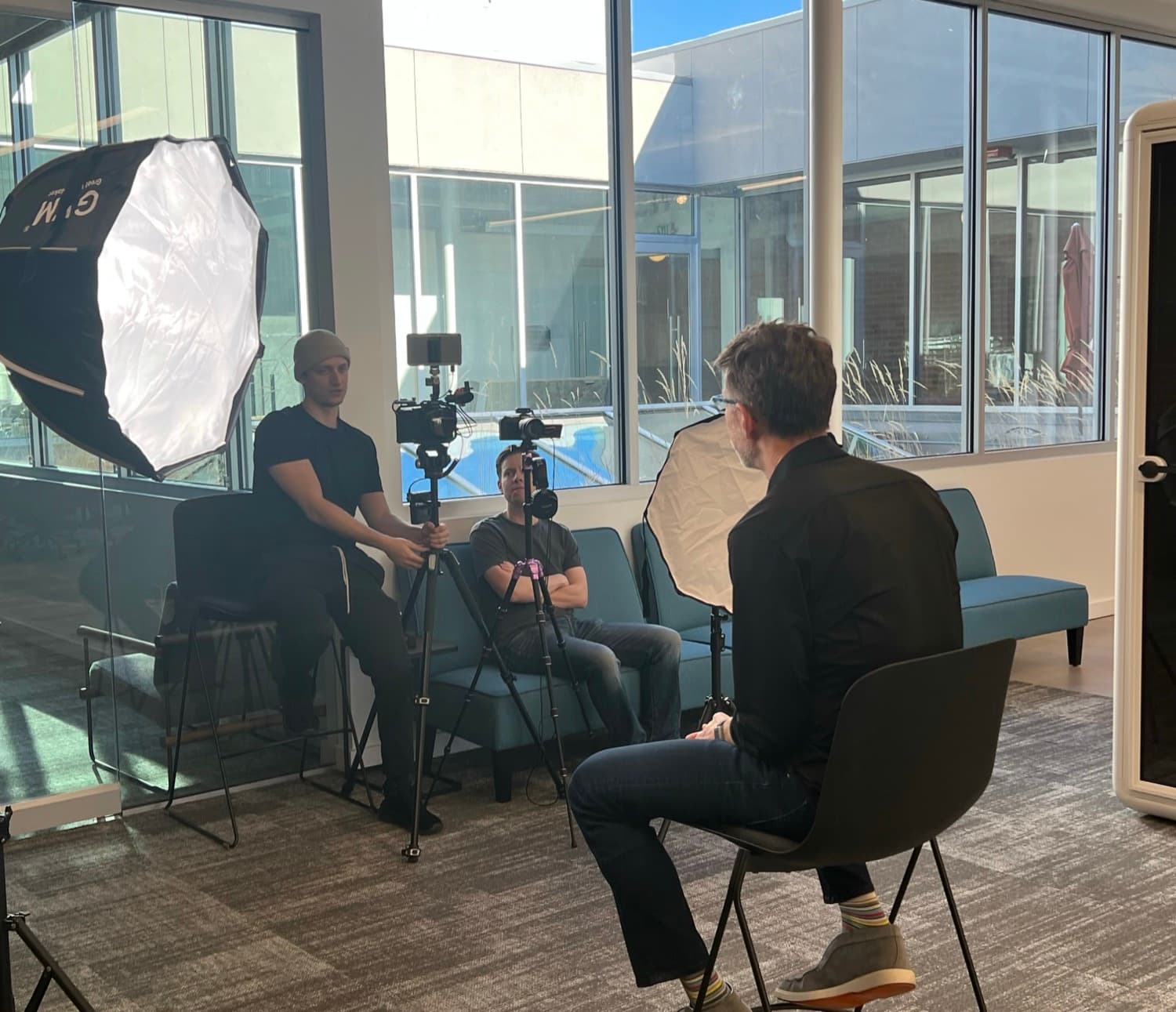
Video is the closest thing to that first meeting. Our monthly plan for a firm would rest on one filming day at your office: the people clients would be hiring, on camera, plus the office itself and any talk or client event on the calendar. The edit turns that day into 30 clips for the month. Below is how we would set it up.
Start with the questions clients already ask.
A firm's content plan is already written. It lives in first calls, intake forms, emails and the questions your assistants field every week. Before the filming day, we collect those questions with you and turn them into an interview list.
- Law What happens in the first week? What should I bring to a first meeting? What do people get wrong before they call a lawyer?
- Wealth and investment How do you think about risk? What changes when a business is sold? What should a family talk about before they meet you?
- Consulting What does the first month of an engagement look like? What do you look at first when a company brings you in?
Good questions for a firm have one thing in common: a client could have asked them yesterday. We leave out anything that needs a disclaimer longer than the answer, and anything that only works for one client's facts.
We also write them the way a client would say them, not the way the firm would file them. "What happens to my business if my partner walks away?" is a post. "Partnership dissolution considerations" is a heading, not a question anyone asks out loud.
One partner, one point, one clip.
An hour of interview is a lot of material, and very little of it should be posted whole. We cut it into clips that each make one point, the way a good answer in a meeting does. Subtitles go on every edit, so a clip about selling a business still lands when it is watched with the sound off.
Your partners don't need to become personalities. The format we would use is plain: someone who knows the subject, a clear question, a straight answer, and a title on screen for any term a client might not know. Dre's interviews for Viewpoint by Dennis Quaid put governors, CEOs, athletes and celebrities in the chair across from him, and the craft carries over to a partner: make the person comfortable enough to explain it the way they would to a client.
How the interview day runs.
We set up once, in a conference room or an office with good light. Each person comes in for their block, answers their questions and goes back to work, so nobody loses a day. The rest of the day is B-roll: the office, the team at their desks, a meeting in progress, the building from the street.
If your firm reviews public statements before they are published, that review sits inside our approval step. The monthly plan and each post wait for your sign-off, so nothing goes out that your firm hasn't read.
Talks, seminars and client events.
A client dinner, a seminar or a partner speaking on a panel makes an easy filming day, because the firm is already doing the talking. Vault 2025, the conference we filmed for Valuetainment, had Tony Robbins and Patrick Bet-David on its stage. A firm's own event is planned the same way: the talk, the room, and short interviews in the hallway after. Longer coverage has its own page, event video.
The same day can include team headshots from our photo studio, at $550 plus $75 a head for teams of five or more, so the website, the feed and the people on it all match.
What the month looks like.
One filming day becomes 30 edited clips. For a firm, a month could be shaped like this:
- The answers One question per clip, from the interview list.
- The explainers Longer cuts for the website, where a client can watch a partner work through a whole subject.
- The firm The office, the people and the work in progress, so a new client recognizes the place on their first visit.
- The event The talk, cut into its strongest points and spread over the weeks after.
Every day, on every platform, we post the clips, write the captions and answer the comments and DMs. A message that reads like a prospective client goes to your team, not into a queue. A monthly report shows which answers people actually watched, and the next interview list starts from it. The whole department costs $3,350 a month.
For a firm, the point of posting every day is familiarity. The same faces, explaining things clearly, week after week, until a prospective client feels they have already met the person they are about to call.
The people your clients hire are already in your office, answering the same questions every week. Filming them once a month is how those answers reach the next client before the first meeting. See how the plan works for law, wealth and consulting firms.
Common questions.
The people your clients hire, on camera every month.
In a firm, the product is the people and what they know. We come to your office for a day each month, film your partners and advisors answering the questions clients ask, then turn it into a month of posts and run the accounts.
More from the blog.
Let's film your company.
Tell us what your company does and what happens there on a schedule. We'll come back with what a month of content could look like.