

How to film jewelry for social media.
Jewelry is small, it reflects everything around it, and the detail is the reason someone buys it. Here is how we light it, move it and plan a month of posts around it.


Jewelry is hard to film well. It is small, so the camera has to get close. It is polished, so it reflects the room, the windows and the camera itself. And the detail that makes a piece worth buying, the setting, the finish, the way a stone takes the light, is exactly what a quick phone video loses.
None of that makes jewelry hard to post. It means the filming day has to be planned for it. We come to your store, showroom or workshop for one day a month, film slow and close, and turn that footage into 30 edited clips. This is how we approach the pieces, the bench and the people, and what we post afterwards.
Light the metal, not the room.
A room's light is built for people, not for rings. Overhead lights put hard spots on the metal, and a window turns a stone into a mirror. So we bring our own lighting and set it for the piece: soft, controlled light that shapes gold and silver and gives a stone something to catch. Then we move the light and the camera until the reflections in the metal are the ones we chose.
Stones ask for something different again. A diamond wants small, bright points of light to throw back. A pearl or an opal wants something softer. We check each piece on camera before we roll, and adjust the light until the stone looks the way it does in your hand.
Movement matters as much as light. Jewelry should move slowly on camera: a ring turning, a pendant swaying on its chain, the camera easing past a stone so it flashes once. Fast cuts and quick pans lose the detail. For every piece on the month's list, we plan the same four shots:
- Close The stone, the setting and the finish, near enough to see how it was made.
- Turning The piece moving slowly, so the light travels across it.
- Worn On a hand, a wrist or a neck, so a buyer can judge the size. A photo on white cannot show that. A hand can.
- Boxed The box opening and the piece lifted out, with the sound recorded as close as the picture.
The bench, the counter and the people.
A finished piece shows what you sell. The bench shows the hours in it. If you make or finish pieces yourself, the workshop is some of the strongest footage a jeweler has: metal being shaped, a stone being set, a piece polished until it shines. Nobody else can film it, because nobody else has it.
The counter is the other half. A tray coming out of the case, a ring tried on, a piece turned under the light for someone deciding. We plan these moments with your team rather than film real customers, unless a customer has agreed to it first.
Custom work is worth filming too, with the client's permission: the sketch, a stone chosen from a tray, the finished piece handed over. It shows a buyer what it is like to have something made for them.
Then the people. The designer or the owner talking about a collection is what turns a feed of beautiful objects into a brand someone remembers. We develop the questions with you before the day:
- Where did this collection start?
- What is the hardest piece you have made, and why?
- What should someone look at before they buy a ring?
- How should a piece be cared for at home?
The detail is why someone buys the piece. Give the camera the time to find it.
What to post, and how often a piece comes back.
The day's footage becomes 30 edited clips, from quick vertical cuts to a longer film about a collection, every one subtitled. A single piece can come back more than once in a month without the feed repeating itself, because it comes back in a different way each time:
- New The piece up close and turning, the first time it appears.
- Worn The same piece on a hand, for scale.
- Made Its story, from the bench.
- Explained The designer on the stone, the metal, or how to look after it.
The month's list comes from the calendar you already keep. A new collection landing, a piece back in stock, a holiday people buy gifts for. We build the content roadmap around those dates in the strategy meeting, so the pieces that matter most that month get the most time on the filming day.
We write a caption for each piece and post daily on every platform you use. A question about a size or a stone gets an answer, and a buyer who is ready goes straight to your team. Nothing posts until you have approved it.
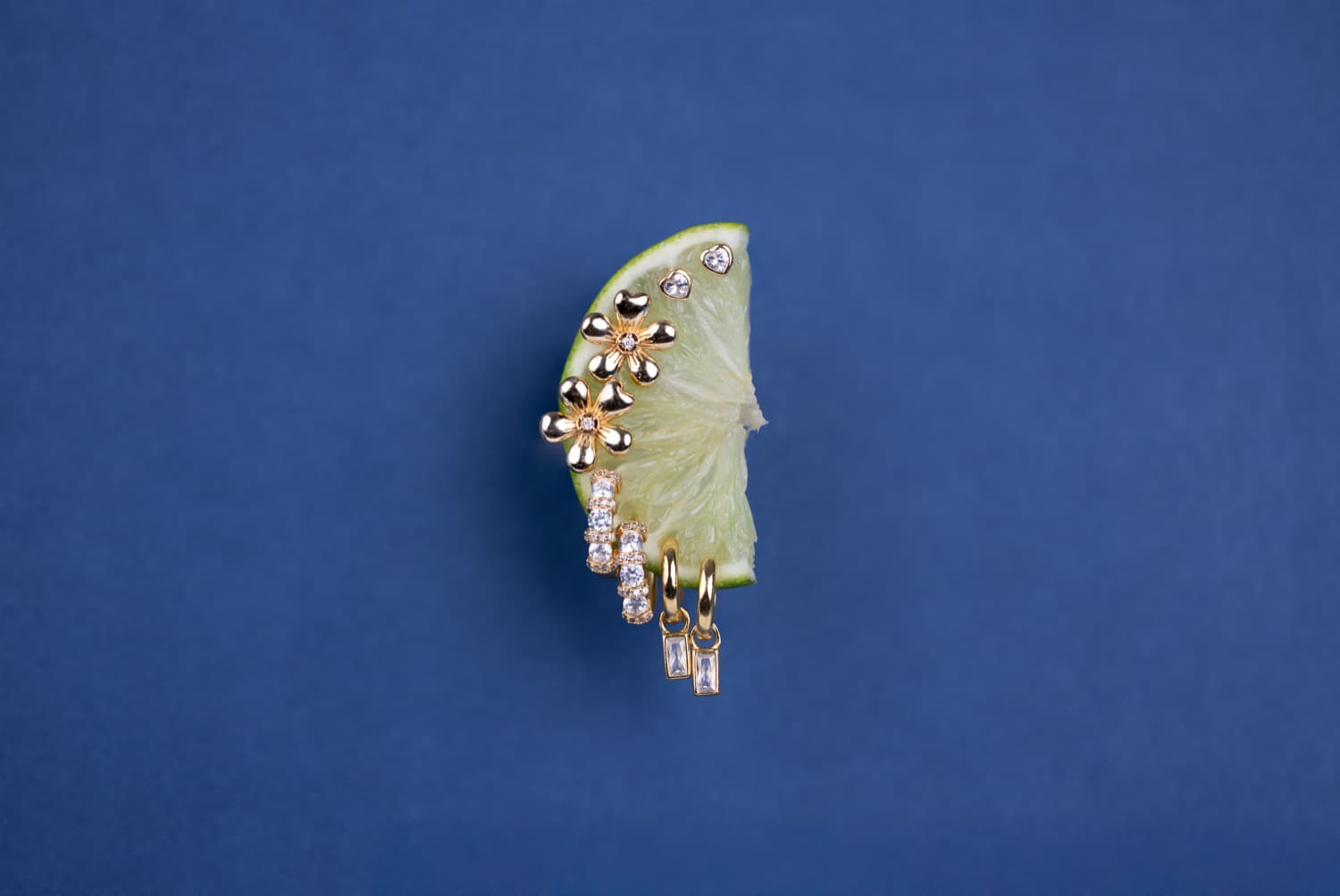
Video and stills are two different jobs. The photo at the top of this page comes from our photo studio in Oakland Park, where we shoot focus-stacked macro stills and styled scenes. Those are booked on their own, with their own packages, apart from the monthly plan.
Jewelry rewards patience: the right light, a slow camera and a hand to show the size. Plan one day around that, and a month of posts follows. See how it works for jewelry brands.
Common questions.
Jewelry on video, close enough to see the detail.
Jewelry is small and the detail is the point. We film your pieces up close at your store or workshop, one day a month, and run the month of posts that comes out of it.
More from the blog.
Let's film your company.
Tell us what your company does and what happens there on a schedule. We'll come back with what a month of content could look like.